
Can My Dog’s Reactivity Be Cured? ….It depends: Why Your Dog’s Behavior Isn’t Random
Behaviors and personalities are complex, adaptable, and evolve over time. It doesn’t matter if we’re talking canines, humans, or pigeons.
We all know the phrase ‘nature vs. nurture’ well, but it is never ‘vs’ It’s *and*. All behavior is a product of both nature and nurture. It’s a constant back and forth feedback loop that applies constraints and possibilities all at the same time.
Every dog is born with a set of genetics that creates a range of possible behaviors. Think of it like a sliding scale. Genetics decides how long and where on the range of possible behaviors and personalities that scale is; life experiences and training decides where your dog actually lands on it.
In very general terms, we can think of dogs as more pessimistic vs optimistic, and more prone to startle/respond vs. sit back and gather info. Leash reactivity is a perfect example. Two dogs can live in the same home, get the same training, walk the same route—and still respond completely differently when another dog appears. One might startle easily, escalate quickly, or struggle to recover after a stressful moment. Another might shrug it off. Those differences often come from the genetic “range” each dog was born with.
This doesn’t mean reactivity is inevitable. It just means some dogs have a wider emotional range and bigger feelings baked into their system. Training doesn’t erase that; it helps them operate on the calmer, more regulated end of their spectrum.
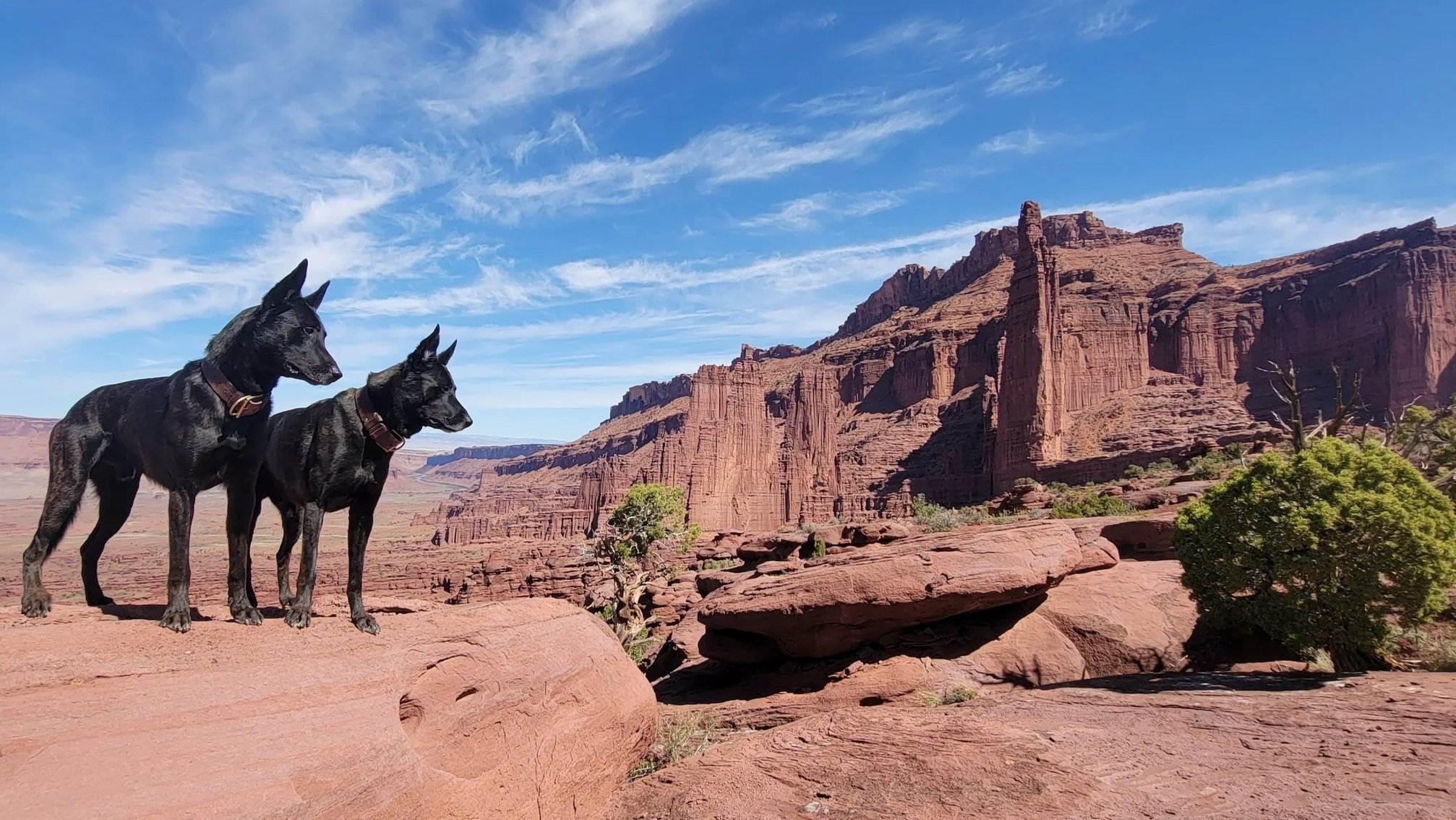
While they look like carbon copies, this father/son pair of dogs have vastly different personalities.
Nurture shapes how much support a dog needs, how safe they feel on walks, how often they tip into reactivity, and how quickly they return to baseline. Genetics sets the potential, but your daily choices—training, predictability, management, decompression—determine your dog’s behavior.
So no, you did not solely cause your dog’s reactivity. Far more goes into it than just a dog’s owner. Take the pressure off yourself of your anxiety, as we go through training and you start to see that your dog can make better, calmer choices, and you have a solid, actionable plan, your stress will shift. It can’t happen magically before then.
Genetics are incredibly individual. I currently have two male Dutch Shepherds who are father and son. The damn of the litter I knew well, too. She was a highly titled and accomplished Schutzhund and tracking competition dog who was also capable of public access service dog work, lived harmoniously with three small children who adored dressing her up, and participated daily in her owner’s doggy daycare. The sire, Tango, is a very well-balanced, confident, stable dog who takes in new info, thinks about it, before acting - even as a 9 week old puppy.
Their son, Archer, is flashy in his movement, quick to swing to big feelings, highly sensitive to body language of people and dogs, and prone to minor suspicion of new people. These all combine to make him prone to reactivity towards people, and a shorter fuse for tolerating ‘rude’ body (staring, leaning in) language/handling from strangers.
While Tango and Archer are father and son, their ultimate personalities have huge differences. Genetics can be a roll of the dice each time, despite close relation. Nothing I nor their breeder did informed how differently they would act towards seeing a new person at 8 weeks old (Tango: Huh, that’s interesting. Archer: OMG, scared scream and run). Both were raised since birth with early socialization and exposure. However, training influenced Tango to remain calm and never overexcited, and influenced Archer to learn that strangers are safe and he can always take his time acclimating.
(Though they do both have optimism towards new places, high sociability with other dogs, high prey drive for toys but not critters - all super useful qualities common in their family!)
Understanding this takes so much pressure off. You stop comparing your dog to the calm lab down the street and instead work with the individual dog in front of you. Your dog isn’t dramatic or stubborn—they’re just expressing the part of their scale that hasn’t been shaped yet.
And the good news: with consistent support, that place on the scale can shift. A genetically sensitive dog can still become a confident walker. A dog with big feelings can still learn to regulate them. Nature sets the possibilities, but nurture decides which ones become your dog’s everyday life.