

Can My Dog’s Reactivity Be Cured? ….It depends: Why Your Dog’s Behavior Isn’t Random
Behaviors and personalities are complex, adaptable, and evolve over time. It doesn’t matter if we’re talking canines, humans, or pigeons.
We all know the phrase ‘nature vs. nurture’ well, but it is never ‘vs’ It’s *and*. All behavior is a product of both nature and nurture. It’s a constant back and forth feedback loop that applies constraints and possibilities all at the same time.
Every dog is born with a set of genetics that creates a range of possible behaviors. Think of it like a sliding scale. Genetics decides how long and where on the range of possible behaviors and personalities that scale is; life experiences and training decides where your dog actually lands on it.
In very general terms, we can think of dogs as more pessimistic vs optimistic, and more prone to startle/respond vs. sit back and gather info. Leash reactivity is a perfect example. Two dogs can live in the same home, get the same training, walk the same route—and still respond completely differently when another dog appears. One might startle easily, escalate quickly, or struggle to recover after a stressful moment. Another might shrug it off. Those differences often come from the genetic “range” each dog was born with.
This doesn’t mean reactivity is inevitable. It just means some dogs have a wider emotional range and bigger feelings baked into their system. Training doesn’t erase that; it helps them operate on the calmer, more regulated end of their spectrum.
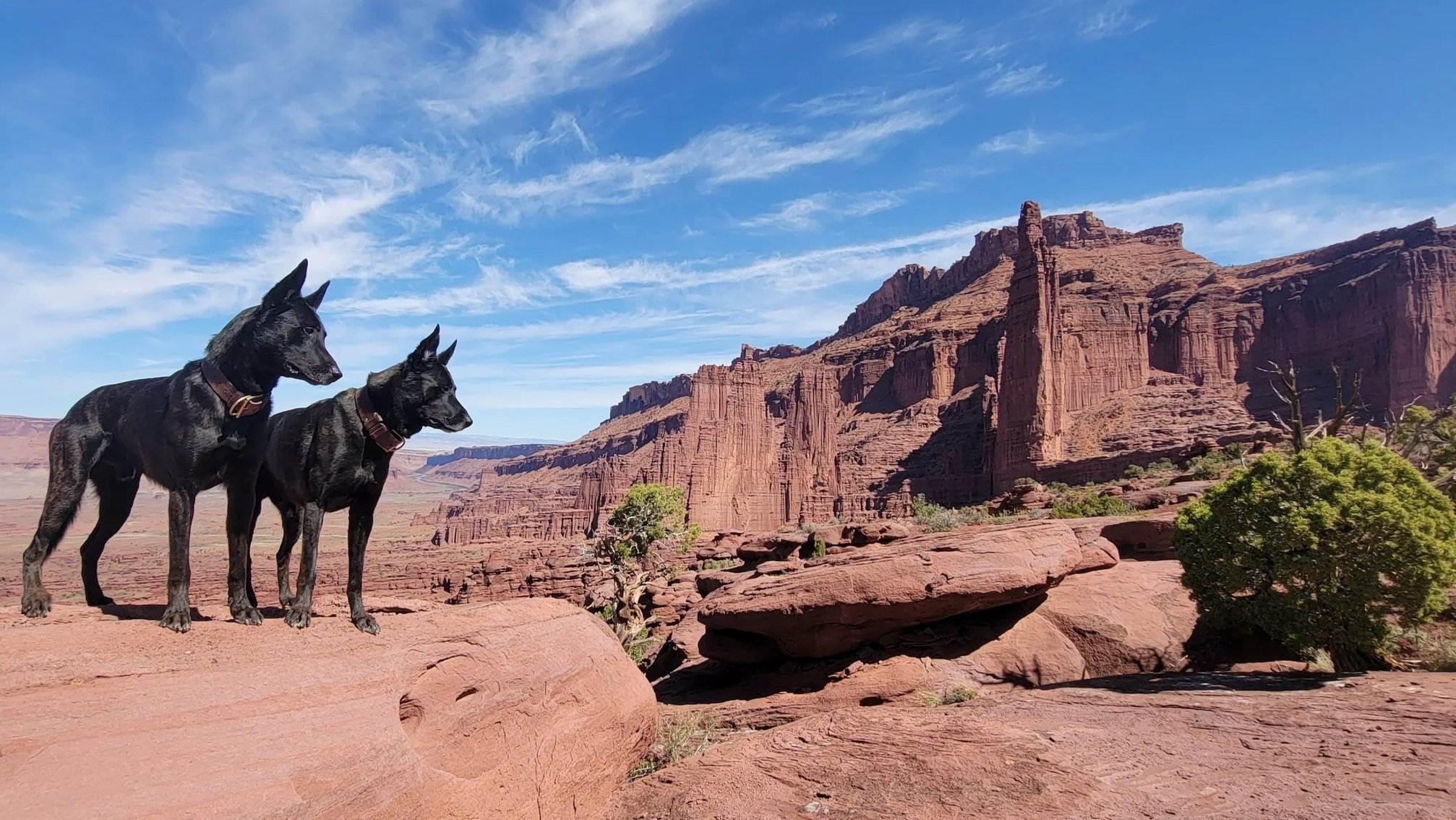
While they look like carbon copies, this father/son pair of dogs have vastly different personalities.
Nurture shapes how much support a dog needs, how safe they feel on walks, how often they tip into reactivity, and how quickly they return to baseline. Genetics sets the potential, but your daily choices—training, predictability, management, decompression—determine your dog’s behavior.
So no, you did not solely cause your dog’s reactivity. Far more goes into it than just a dog’s owner. Take the pressure off yourself of your anxiety, as we go through training and you start to see that your dog can make better, calmer choices, and you have a solid, actionable plan, your stress will shift. It can’t happen magically before then.
Genetics are incredibly individual. I currently have two male Dutch Shepherds who are father and son. The damn of the litter I knew well, too. She was a highly titled and accomplished Schutzhund and tracking competition dog who was also capable of public access service dog work, lived harmoniously with three small children who adored dressing her up, and participated daily in her owner’s doggy daycare. The sire, Tango, is a very well-balanced, confident, stable dog who takes in new info, thinks about it, before acting - even as a 9 week old puppy.
Their son, Archer, is flashy in his movement, quick to swing to big feelings, highly sensitive to body language of people and dogs, and prone to minor suspicion of new people. These all combine to make him prone to reactivity towards people, and a shorter fuse for tolerating ‘rude’ body (staring, leaning in) language/handling from strangers.
While Tango and Archer are father and son, their ultimate personalities have huge differences. Genetics can be a roll of the dice each time, despite close relation. Nothing I nor their breeder did informed how differently they would act towards seeing a new person at 8 weeks old (Tango: Huh, that’s interesting. Archer: OMG, scared scream and run). Both were raised since birth with early socialization and exposure. However, training influenced Tango to remain calm and never overexcited, and influenced Archer to learn that strangers are safe and he can always take his time acclimating.
(Though they do both have optimism towards new places, high sociability with other dogs, high prey drive for toys but not critters - all super useful qualities common in their family!)
Understanding this takes so much pressure off. You stop comparing your dog to the calm lab down the street and instead work with the individual dog in front of you. Your dog isn’t dramatic or stubborn—they’re just expressing the part of their scale that hasn’t been shaped yet.
And the good news: with consistent support, that place on the scale can shift. A genetically sensitive dog can still become a confident walker. A dog with big feelings can still learn to regulate them. Nature sets the possibilities, but nurture decides which ones become your dog’s everyday life.
Real Enrichment, Real Fullfilment, Real Rest
An enrichment toy is to dogs what a sudoku puzzle is to humans.
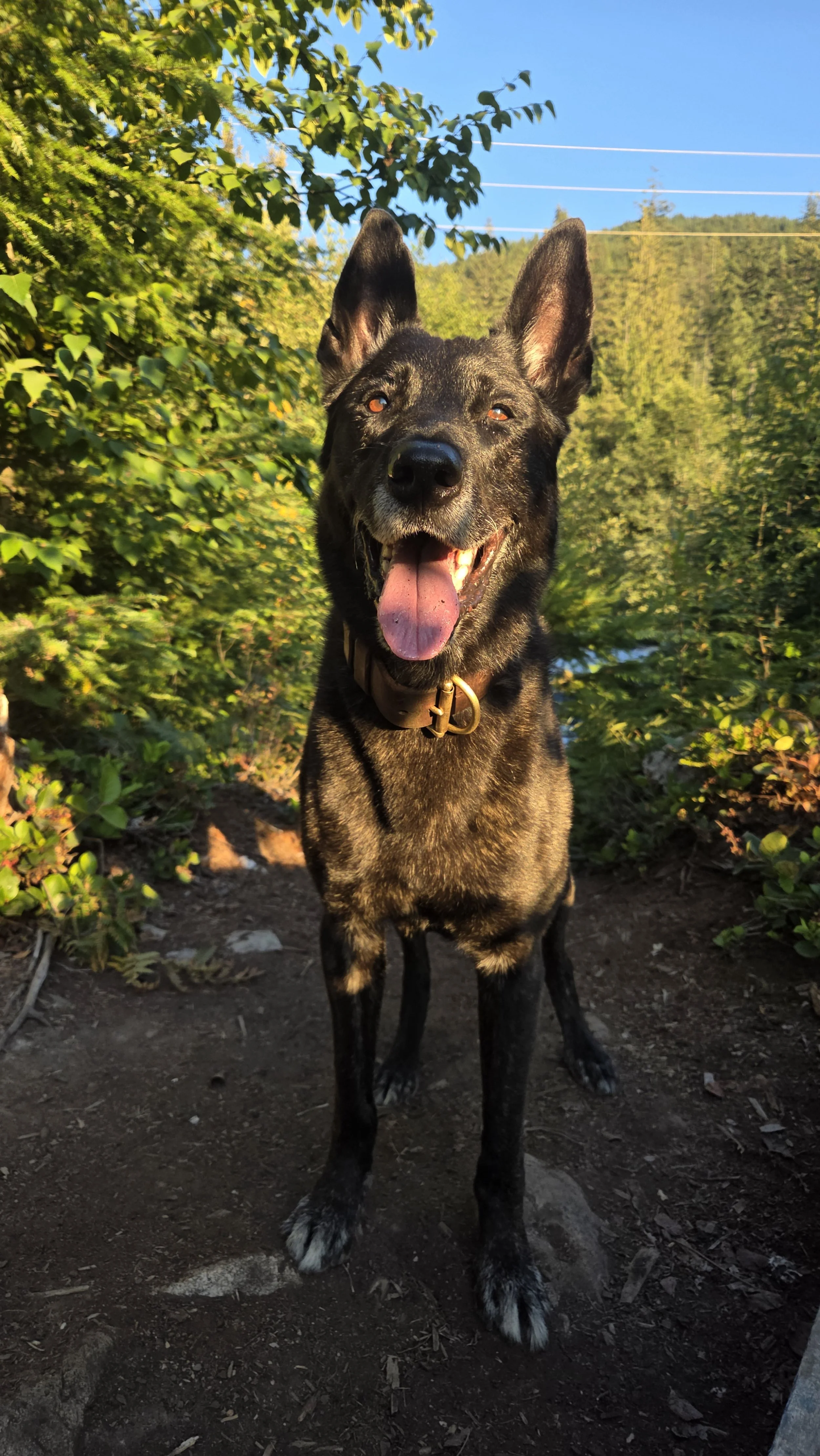
Tango excited to get to go explore a new section of forest together
It’s a fun little puzzle to have daily. A nice way to unwind and switch from a hectic day to a restful evening. A little boost of excitement and accomplishment when you complete a puzzle.
But it isn’t a substitute for doing the things that drive us humans - our real life goals, purposes, and relationships.
Enrichment isn’t just what can be bought
Or made out of scraps. Or scrounging for treat bits.
It’s fulfilling our individual genetic needs and drives.
It’s using bodies and muscles and proprioception.
It’s relationships and connections.
Enrichment, in the context of zoo animals and pets, is “a creative outlet for physical activity and mental exercise, as well as choice and control over how they spend their time” (Smithsonian National Zoo). And for animals in confinement, this ends up relying heavily on replicating foraging or hunting for food. Which is absolutely better than pellets in a dish in a sterile enclosure.
But our dogs aren’t zoo animals, and aren’t captive to the inside of our houses. Their enrichment can, and needs to be, more than to just puzzle toys and kibble hidden in empty paper towel rolls. (Except in the case of reactive or fearful dogs who need a quieter world. But keeping them entirely inside won’t help them gain confidence and grow as individuals. And of course for dogs recovering from illness or injury).
Enrichment is “the action of improving or enhancing the quality or value of something” (Oxford Dictionary).
What enriches your life? What makes you feel content? Satisfied at the end of the day? Accomplished? Able to rest, quiet?
It’s not chores or day-to-day routines.
For me, it’s time out in nature, when I’m hiking under big trees. Most of all, when I’m climbing on rock, fully engaged in making difficult moves and keeping everything spot on with our rope systems to keep us safe.
I’m enriched when connecting deeper with people, even in small glimpses.
I don’t feel truly enriched in life from sudoku puzzles.
I don’t feel truly enriched in life from casual conversations.
Frozen kongs and foraging for kibble are great - but they’re small glimmers of enrichment that just can’t stack up to what dogs’ genetics drive their minds and bodies for. They’re doing some sudoku puzzles and talking about the weather.
It’s a tiny intellectual snack.
Your dog is no different.
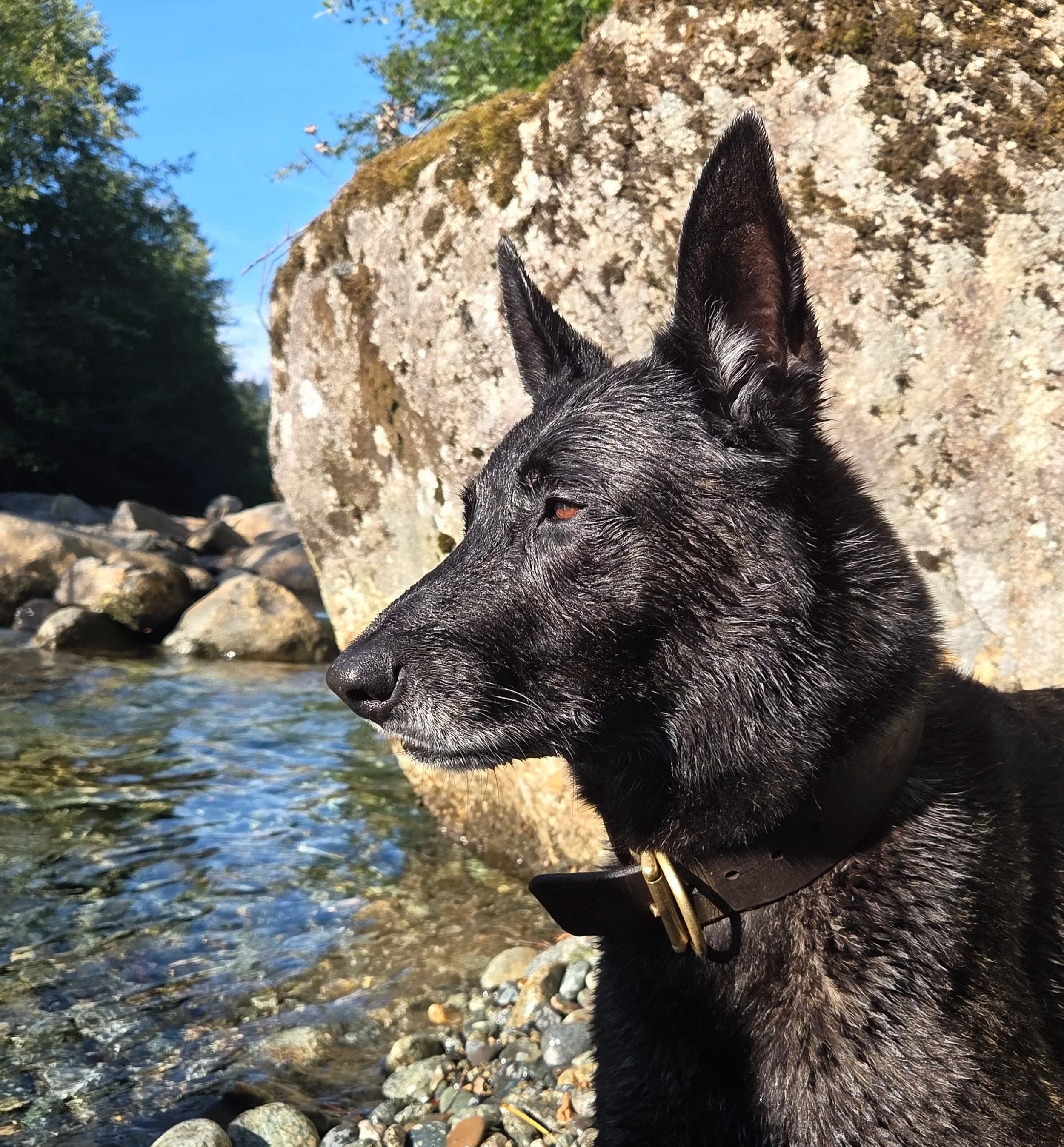
Tango feeling content after searching for sticks along the river
Enrichment = Fulfilling Genetics
Every breed—and every individual—carries generations of instincts, preferences, and abilities. Real enrichment taps into those instincts so dogs can do the things they were built to do.
Genetics also vary between individuals. It isn’t always a guarantee that every herding dog wants to herd. Just like from person to person, we can be more introverted or extroverted and have vastly different hobbies that call to us. The key is to watch your individual dog and see what sparks their ‘ahh, yes this!’
What Real Enrichment Looks Like
True enrichment is meaningful, engaging, and tied to who your dog is.
Your dog isn’t entirely trapped inside your home their entire life, like a zoo animal is inside their enclosure.
Your dog can venture out into the woods, an open field, a pond, a friend’s backyard - even on a long line. They can go for a drive and travel with you.
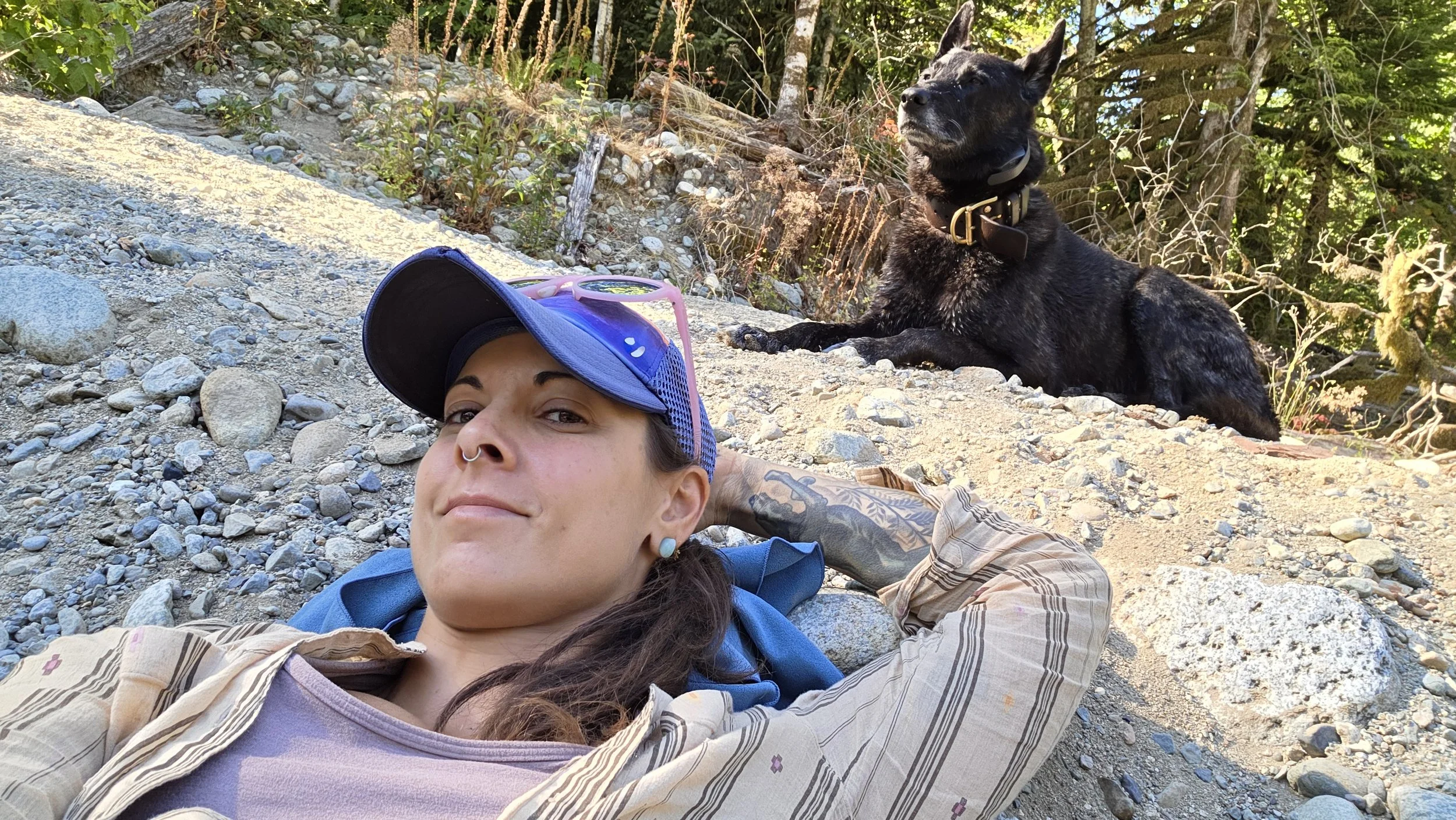
But most of all Tango wants to be out there doing the things together.
The absolute - biggest gamechanger - is shifting activities to be done *together*
At the start of all of our dogs’ histories, a common genetic thread they all share is doing their thing with their people.
Sometime between 30-50,000 years ago, protowolves started hanging around humans. That species then branched off into wolves and into dogs. Why did we hang around dogs?
It wasn’t just because they are adorable and furry and good at getting rid of scraps.
It was because they’re incredible at hunting - compared to us. Dogs have amazing scent and tracking abilities (obviously, especially compared to us!) And they are incredibly good at noticing movement. Which all means they are the ideal companion to help us locate prey out in the wild.
Then we were the ideal companion for dogs, who had spears and weapons that we could *throw* at prey from a distance. Game changer to be able to hunt from a distance, and not risk being injured running in to attack with your own teeth.
From there, it’s been thousands of years of guardian dogs watching flocks with a shepherd, maybe independently making their own decisions, but still moving through the world together. Thousands of years of hounds helping us find our next meal. Thousands of years of herding dogs listening to our guidance about where to move the flock. Thousands of years of terriers keeping down the rodent population for us while keeping us warm at night.
Moving through the world together and building a relationship through the mundane and the exciting. It isn’t transactional about just sitting and waiting for a release before eating a meal. It’s figuring out a puzzle of teaching your dog something when you both speak different languages, and figuring out that common language together.
Enrichment for dogs (and us!) is developing our relationships, novelty in our environment, and feeling accomplishment.
Accomplishment comes from figuring out puzzles, learning things, and I find most of all, ‘completing’ some sort of pattern that looks like what your dog’s general breed type was bred for. Herders want to control movement, terriers and protection breeds often want to be able to ‘catch’ the toy/prey. Most dogs love the process of using their noses to follow a scent to its source.
Here are some real-life examples:
For scent-driven dogs: Long decompression sniff walks, hide-and-seek games with scented objects, teaching them to track footsteps/trails.
For chasers: Flirt pole play, structured fetch, drag toys, or games with controlled movement.
For diggers: Designated dig boxes, sand pits, or safe “rooting” activities.
For chewers and shredders: Raw meaty bones (specifically vertebrae, which are softer and safer to gnaw on), cardboard destruction projects, tug games.
For problem-solvers: Real-world challenges—navigating different surfaces, exploring new places, climbing logs, stepping over rocks, figuring out how to reach hidden objects.
For social or relationship-oriented dogs: Training sessions learning new skills, massage sessions, engagement work on walks.
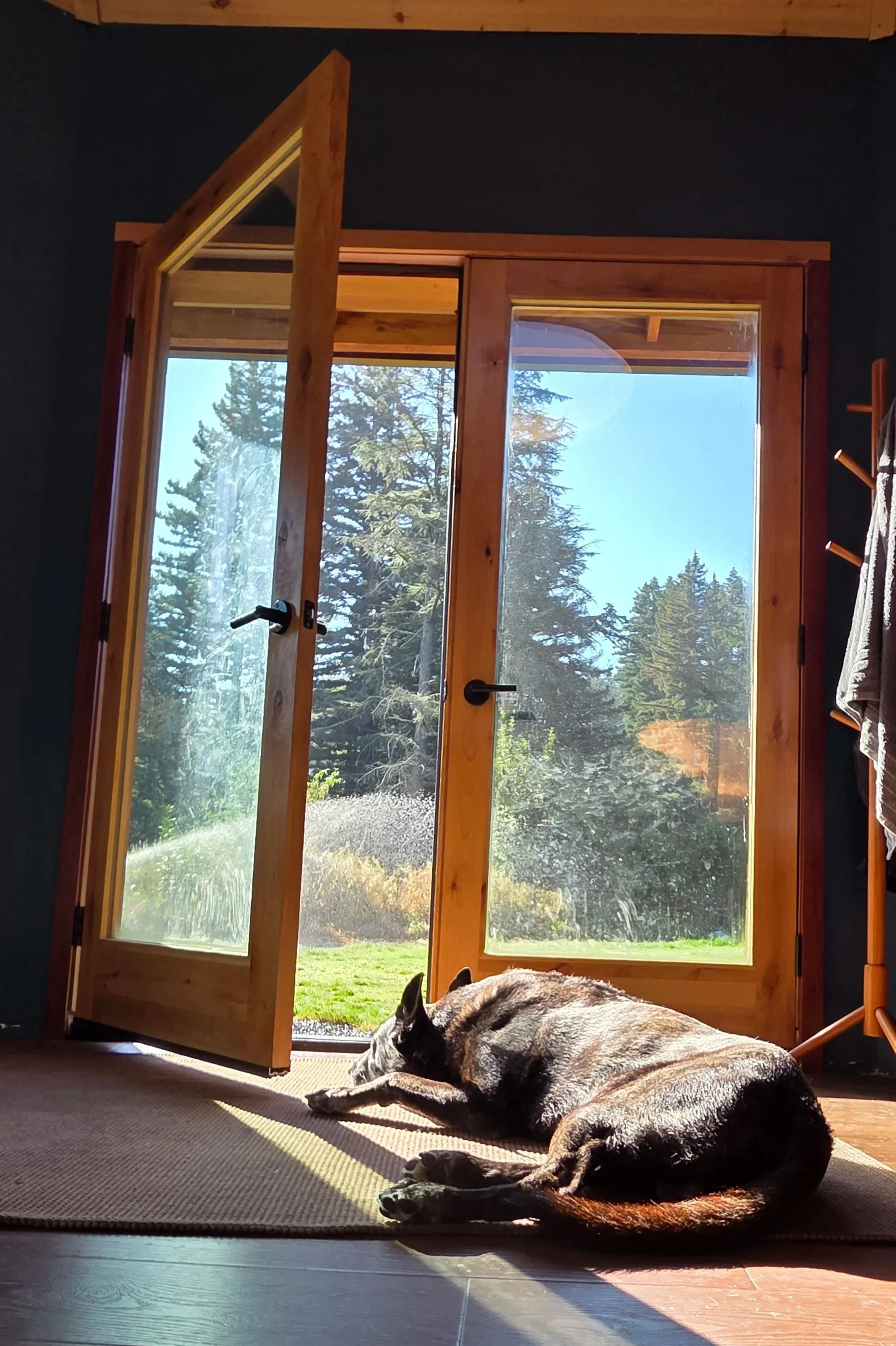
Tango watching the yard from inside, to stay just a bit closer to me.
Enrichment Is About the Whole Dog
Think less “quiet dog is good dog” and more “dog doing dog stuff in appropriate ways.”
The goal isn’t to tire them out so they sleep. It’s to fill their bucket so they feel satisfied, balanced, and able to make good decisions.
It’s about variety and building challenges, too. The same slow feeder might be interesting a few times, but it will quickly just feel frustrating. The best long-term enrichment activities are ones that you can mix up. Think hiking in new places, or shifting from searching for food to searching for a nosework scent for a food reward after finding it, then increasing the difficulty of the hide location and search area size! Exploring the world together doesn’t have to mean traveling all over the US. It’s as simple as showing your dog what’s underneath a rock in the stream or checking out a cool stick or leaf in the ground (my favorite ways to bond with puppies).
When you choose activities that align with your dog’s instincts, you don’t just get a tired dog—you get a fulfilled one. And fulfilled dogs are calmer, happier, easier to train, and more connected to their humans.
Enrichment puzzles, stuffed kongs, and chews are absolutely a part of my dogs’ everyday routine! But they’ll never replace real life enrichment. Enrichment toys and little games are great to downshift when they need to transition from running to resting. Just like sudoku, they’re a great little treat to add into the day that does no harm, and gives them some fun dopamine. And on days when I’m just too sick or the weather is too bad, they can act as a temporary filler to help offset those boring days.
Final Thoughts
Puzzle toys are great. Keep them! Use them! They’re part of the picture.
Just don’t let them be the whole picture.
Your dog’s enrichment should be as rich and varied as your own.
After all, both of you deserve lives filled with more than sudoku and quips about the weather.
Stressor to Signals for Reactive Dogs
Our last few blogs built the foundation for what can be the most powerful, effective and simple type of behavior modification training. Turning stressors (triggers) into signals (cues) to DO something. Let’s break that process down a bit.
Anxiety is the worry about the unknown that might be coming.
It’s stress about something that hasn’t yet happened - but is out there, possible. Anxiety is an understandable response in dogs. Their world is so far outside of their control, and sometimes things they perceive as scary *do* get too close. They have very little agency in their day to day life. They go out when we open the door. Eat when we feed them. Walk the directions we choose. And go to the park or on hikes on days that work with our schedule.
The more we can teach dogs to make productive choices, even small ones, the more confident and less anxious they’ll be.

Of course dogs can’t make all the choices - they’re dogs, and they’re living in our human world. Going out to play fetch at 10pm isn’t an option, that’s past my bedtime. Sometimes we do have to make stressful vet visits. That’s life and it’s our job as humans to ultimately make all the choices for our dogs’ health and safety. Giving them the ability to choose isn’t to remove our best judgment - it’s to show them they can make choices that ultimately help them feel better about situations *without* us micromanaging and telling them what to do each step. It’s the same as letting a toddler choose apple or orange juice with their lunch. We’re not letting them choose an IPA here.
So when your reactive dog learns that other dogs they see are a CUE to Check-In with you - it opens up a huge new window of confidence.
When Check-In’s, or any skill, have a +CER (positive conditioned emotional response), and are something your dog loves to do on a fundamental level, just the act of doing those skills releases feel good hormones and boosts their emotions. When we can add on praise, a food/toy reward, and movement - wow! Jackpot!
Just like teaching an automatic sit at the door (see last month’s blog!), we can teach an automatic Check-In from other dogs by getting the timing and pairing right.
There’s only one difference - we first need a dog who can think. This might take some time of Counter-Conditioning training, desensitization or neutral movement. (Reach out so we can build a plan that fits your dog’s needs!) If they are in Fight/Flight/Freeze mode, no constructive thoughts or learning can happen. So first, we need a dog who is reasonably holding it together and able to engage, after some foundational behavior modification training.
Once they are a bit more relaxed, we pair the new cue (another dog) with their Check In cue (usually their name). If this happens within 2 seconds, your dog starts to learn “wow, every time I see that other dog, I Check-In, and get the fun times.” Now another dog starts to become the most salient (obvious) cue to Check-In, and we start fading how obvious our prompts are, until we aren’t needed.

Goose the husky pup learning to confidently hang around and be neutral with other dogs
When your dog starts to really get it, it’s a striking light bulb moment that changes how they see other dogs. They now suddenly have agency to make a choice that makes them feel better. It relieves the stress of feeling like they have to bark, lunge or react to make the trigger go away.
The fear of the unknown dissipates, since they know they can do something.
And best of all, it doesn’t rely on distracting your dog away from other dogs. So if a trigger pops up before you notice, it doesn’t make a difference! Your dog can act to make good choices without you. The snowball of them building their confidence can keep growing as we reinforce their good choices, and set them up for success.
It does take careful setups while they're learning. Remember, dogs aren’t good at generalizing! Our job is to show them all of the potential variables, and help them work through understanding it’s the same cue, even if something has changed. They’ll need help around different types of dogs, different distances, environments, dogs suddenly appearing vs. already out at a distance, different energies, etc.
But it’s so worth it. Archer, my younger Dutch Shepherd, was anxious about strangers from puppyhood. His ability to hike off leash is because he knows that new people = Check In with me. He’ll notice people long before I can by smell or hearing. And he’ll freeze mid trot to think. Then make his way back to me for a piece of cheese. Instead of a panic moment and potentially making a not-so-good decision about a trigger coming, he knows the next steps have nothing to do with that potential trigger - its a cue to come back to me. Once he’s feeling neutral, he can pretty quickly switch into social mode. Which is such a relief for a dog who really just wants to be pet by everyone all the time!
If we’re always micromanaging our dog’s lives, they don’t learn how to feel confident in themselves. Anxiety is a feedback loop that grows. Simply remembering feeling anxious about something, causes us to remember that stress, and feel it even more each time. Now there is something to worry about! We need to give our dogs enough support to navigate the world successfully, and guide them when things maybe just too much to handle. This is never leaving them out there to feel like they have to take on a potential threat by themselves - but to move beyond just trying to override their emotions with obedience, and even beyond building better associations with Counter Conditioning, to giving them opportunities to feel successful working as part of a team with us, not just working for us.
Stressor to Signal - Teaching Automatic Behaviors
Now that we’ve shifted from thinking about the behaviors or skills our dogs do from ‘commands’ we issue to ‘cues’ they are following, a HUGE new world opens up to what a cue can be.
We know that a cue can be something we say, like the word ‘sit.’
It can be a visual cue, like raising a hand straight up to signal for a down.
But the environment or even a distraction can also become a cue.
A cue to Check In can be another dog.
A cue for a recall can be a deer crashing through the woods (really!)
A cue for going to their bed and settling can be the doorbell (yes, for real again).

Anything that stresses out your dog, or stresses out YOU, can become a cue to DO something better. Which builds their confidence and massively increases the chance of them listening if they need extra help of your backup verbal cues.
Dogs are smart. Dogs are observant. And dogs are very, very good at learning the sequence of usual events, to predict the next. You’d be just the same too, if trying to figure out what was coming next was all you had to think about most all of the day.
Dogs don’t read the shared Google calendar. They don't know ahead of time when the schedule will be different, or when it’ll be exactly the same as usual. They don’t know when someone is coming over for dinner, or when we’re heading out for a short walk or a cross-country drive. Everything is a surprise, until they learn to anticipate changes in our behavior and in the environment to give them crucial cues about what’s coming next. Having some understanding and predictability in their lives gives dogs a huge sense of confidence and belonging, rather than just being at our whims and waiting for the next big surprise (hello anxiety!)
Let’s use their incredible predictive abilities to expand what their cues are. When the environment or distractions be come cues, their offering good behaviors will start to seem automatic. In reality, something like a recall back to heel position isn’t actually ‘automatic’ (thats for cars and computers) but a learned association of the cue of seeing someone coming down the trail, to mean come back and stay at heel until we pass.

Step 1
Pick the stressor. This can be a trigger for overthreshold behavior or a distraction. Example: Jumping, scratching or rushing at the door or gate.
Pick the behavior that would be a better alternative. Example: Sitting at the door until released.
Step 2
Build a +CER (Positive Conditioned Emotional Response) with the new, alternative behavior. Key is to build a good history of rewards and good emotions with the skill first. They should be coming quickly and happily when you call ‘come.’ They should be happy to sit, relaxed in an down on their Place or bed, etc.
Step 3
Build the association with the formula!
Show the new cue -> give the old cue -> reward BIG
The key here is (sigh, as always in dog training) the timing.
First, give or show the new cue. For our door example, it’ll be my hand on the doorknob.
Within 2 seconds, cue a verbal ‘sit’ Then, mark ‘ok!’ to release and open the door
Rinse and repeat. For how long? Well, it depends on your dog. Their training experience, their level of distraction, focus, and the day. Start with 10 reps.
Step 4
Then, start fading the OLD cue.
By now, your dog has likely started to figure out ‘hey, usually right after the hand goes onto the doorknob, I sit, then get the reward of going outside. So I might as well start sitting as the first thought of ‘outside’ and not wait for the word ‘sit’ to get there faster.’
Put your hand on the doorknob. And now wait. If 5 seconds go by, give a small hit for the behavior. Maybe a small hand signal, saying ‘sit’ quietly, or just prompting with ‘hey, what’s next?’ or something encouraging. “What comes next?” “Yup, you’ve got this, think it through” Dogs need time to noodle it through, and make the connection that the next step is up to them offering some sort of behavior.
As soon as they even START to offer the behavior, mark ‘Ok!’ and open that door. As we fade the old cue, we want to reward just the *thoughts* of offering a behavior.
If we help too much, your dog will end up on autopilot. And they’ll be stuck just ‘doing’ whatever they impulsively come up with until you step in and direct them. But when we give them time to connect the dots and realize they can actually DO something to get what they want, they start to learn how to think and act constructively. THIS is cooperation. This is training for a partnership together.
Now, hand on door = sit and wait until the marker and release of ‘Ok!’
What’s causing stress in your life with your dog?
What’s stressing your dog out in life?
What are behaviors you’d like to see your dog do ‘automatically?’
Recall? Place? Heeling? Dropping a toy?
Let’s build a plan and make it happen!
What’s in a Sit? Foundation Skills - Cues vs. Markers
Using Cues and Markers with the right ‘grammer’ in our training language means we can teach dogs to respond to their environment even *before* we have a chance to call their name, or say ‘leave it’ or tell them to Place. Because who doesn’t want a dog who can happily automatically come back to you when they see a squirrel? Or automatically check in with you when they see another dog on a walk? Or back up and sit when you start to open the door?

Otis sitting after I said ‘sit’, waiting for me to say ‘yes!’ and throw the ball.
Commands. Cues. Markers. Hand signals. Clickers. Leashes. Lures, and Tones…. Just on the surface, sometimes all the extra pieces of dog training can feel convoluted, complicated, and enigmatic. The details of communication with our dogs matter more than anything else. Good communication helps our training and daily interactions be clear, consistent, and efficient. The foundation in all of this is understanding the grammar and language of how our dogs understand us.
So what’s in a sit? What does it mean when your dog sits for a treat? Are they doing it because they saw a treat come out, or your hand raise up, or because they heard a sound in that same “Siiiiiiit” tone?
Instead of getting bogged down with too many terms, options, and opinions, let’s simplify it with the basics of all communication and learning theory: it all comes down to Cues and Markers. As soon as you’re using cues and markers effectively in a way your dog understands, you’re commuication together will flourish. It isn’t about issuing out commands for your dog to follow like a computer - but ways that we can help them understand the world, and have our crucial communication be a two-way street together, building cooperation and opening up so many opportunities.
Often it feels like the semantics of language come off as unnecessary. “Well, you know what I mean…” And yes, sure, many times, the listener does know what the meaning and intention is supposed to be. But lumping together terms creates a gray zone - and that gray zone is the enemy of dog training for us building a plan, and our dogs to understand what we’re actually after.
The terms ‘cue’ and ‘marker’ are some of the most commonly misused and confused. Once we can differentiate and use them to their potential, we’ll instantly raise our training levels. Efficient means less frustration for the learner (our dogs), more rewarded successful reps and more cooperation together.
What is a Cue?
A cue is a signal to do a specific behavior or that an event that is about to happen. A cue tells your dog what to do next or what is coming next, and has bearing on what they’ve already done, seen or experienced. It’s the start of the chain.
The most common cues are verbal words (sit, down, stay), or hand signals. Your dog will also start to pickup on cues that happen in your daily routine too. Putting on running shoes becomes a cue that you’ll be going for a walk soon. Packing a bag might be a cue you

Kai offering eye contact to start the game of fetch again
What is a Marker?
A marker captures a snapshot in time and tells your dog what that moment means. A marker is information about the consequence that will happen next because of a behavior or experience. A consequence can be either positive or negative of course.
Common positive reward markers include a clicker sound, a specific word like "yes," or a hand signal. When I say ‘Yes!’ to my dog, it means “That was perfect, you’re done, and can come get a treat!” So “yes” lets my dog know both that the behavior was good and where to get their reward and what kind of reward it’ll be. Teaching marker words that are specific to the reward type and location gives our training an extra layer of clarity that reduces frustration and builds clarity. The marker word “chase” means the same ‘that was perfect, you’re done’ - but means I’ll be throwing a toy instead of a treat. For a dog who is absolutely obsessed with balls and fetch, imagine their disappointment when I hand them some dry kibble instead of throwing a toy. And vice versa for a food-obsessed pup who doesn’t really care about fetch. But, much more on markers and all they can do later on!
Cues and Learning Routines
What’s so incredibly cool about how dogs learn is how they’re naturally brilliant at figuring out events that tend to be linked together. Because we can rarely tell them “hey, we’re going to go out to the park to play at 3pm today” they notice all the little cues that tend to lead one to the other, ending in the fun thing! At first it’s just the car ride that gets them excited. Then they might realize that before each car ride to the park you put on running shoes (not sandals or work shoes). Then maybe it’s filling a water bottle…until the smallest thing that usually starts the chain of events ending at the park gets them excited.
Now what?
The key takeaway to start with - is that the cue happens first, then behavior, then the marker, then lastly, the reward.
Cue—> Behavior —> Marker —> Reward
Next couple ‘o blogs will delve into how we can reframe what we think of as a cue from our dog’s perspective of what they actually are perceiving as the cues. Both to make sure they’re actually listening (and not just watching your hand in the treat pouch) and to get those automatic recalls, check ins, sits and more….
Six Little Pieces
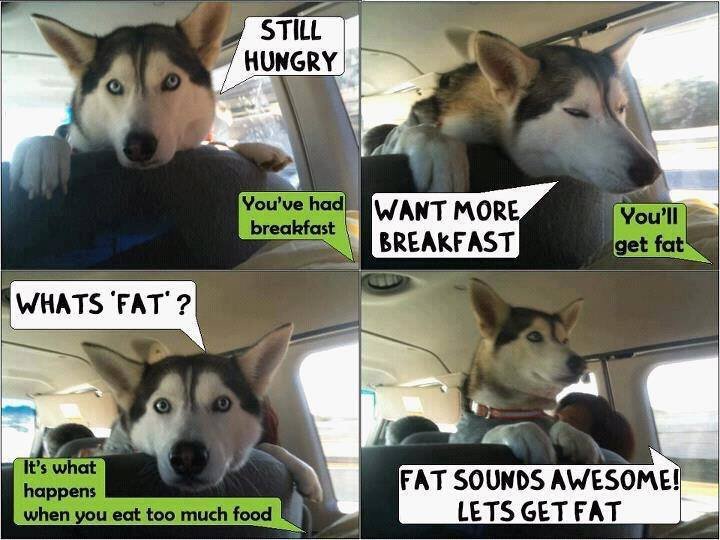
Six Little Pieces… it sounds like a self help book. Or a philosophy for living minimally. Maybe even part of a recipe for dinner? But nope, it is actually a phrase that became our mantra during a past summer’s Nosework class. “Six little pieces!” Then counting out “One, good dog... two...three, what a rockstar...four, oh just excellent...five...six, super!” while doling out morsels to an eagerly awaiting pup. Eyes big with anticipation, tail wagging, not believing his luck!
Are we just spoiling this happy pup? Teaching him the world is all about eating as much as you want? Of course not - we’re specifically rewarding hard work with a worthwhile reward.
This is less about the actual delivery of specifically six pieces of food, and much more about making the reward meaningful by the duration and our involvement. Think of it as “five pennies is worth more than a dime.” The size of the actual piece of food reward is less important than how many and over how long. As much as your dog enjoys a big hunk string cheese - they’d prefer you delivering kibble one at a time while praising what an amazing job they’ve done over a solid ten seconds, then you just nonchalantly handing them cheese. Toy rewards have duration built in throughout the toss, catch, and tug engagement from you when brought back.

Patrick alerted to odor source, under the chair, during Nosework class - now excited for the payoff!
When asking a dog to do something difficult, we need to be sure we are rewarding accordingly - especially in early training. If my dog does a down on cue for the first time, and I passively tell them ‘good dog’ then move on, the likelihood of getting another down on cue isn’t very high. If I reward with a piece of roasted chicken - that likelihood goes up quite a bit. If I reward with lots of praise, some food and play - well then my dog is going to starting offering lying down, trying to go even faster, and being happier about it when asked! We’re over simplifying here, but what we’re doing is teaching our dogs that the behavior itself is rewarding, because of the anticipation of reward. Make them think ‘why the heck wasn’t I just doing this the whole time? This thing is AMAZING!”
When you have higher motivation to work by clear rewards, we can eventually ask for more behaviors in a row over a longer period of time, without losing focus. Meaningful rewards and praise build your dog’s confidence when they’ve worked hard for it (note: we don’t use these as bribes, they are rewards for behavior). A dog confident that they can figure out the right answer tries harder, even under distractions. When the game of obedience itself becomes fun, you will be able to vary how often, and what kind of rewards you give your pup.

Why I Don’t Use Commands in Dog Training
It all begins with an idea.

Kai in a down, because the first three times I threw the ball, I asked him to ‘down’ first. And rewarded with a throw. Then it became a fun game to anticipate the ‘down’ cue, for me to throw the ball again.
Nope, I don’t use commands when I’m training my dogs.
But no, my life isn’t overrun with chaotic dogs destroying the house or running away over here. And they know how to walk on a loose leash, to stay close when off leash. They adventure with me hiking in the forest in the desert, they can hang out at a coffee shop, and they share space around valuable toys or bones. They even compete in obedience - where precision, focused heeling, sits, downs and retrieves are judged for speed and precision. So yes, they know plenty of words and hand signals.
Ok, so maybe I’m just being a stickler for semantics here. While I don’t use commands, I do use cues - and lots of them. And maker words, also so many of those.
Cues, though, aren’t commands. A command has a connotation that it *WILL* happen every time. But I’m not a drill sergeant micromanaging my dogs’ lives (wow, that would take way too much energy), and they aren’t computers ready to instantly comply. You can input a command on a computer, and it will execute every time. Because it’s been programmed. It’s a machine.
Dogs, though, aren’t computers. I can’t program a sit during a training session in my living room on Monday, and expect my dog to sit exactly the same on a walk on Wednesday, or at Home Depot next weekend, or even again in my house in a year if we haven’t practiced it.
The word ‘sit’ is just one part of what a dog takes in when they’re learning. It’s the verbal cue. Your dog is also learning where they are, if you have treats in your hand, if you’re standing facing them, and every little detail. Your dog is learning skills in a much bigger context than just the words you’re saying.
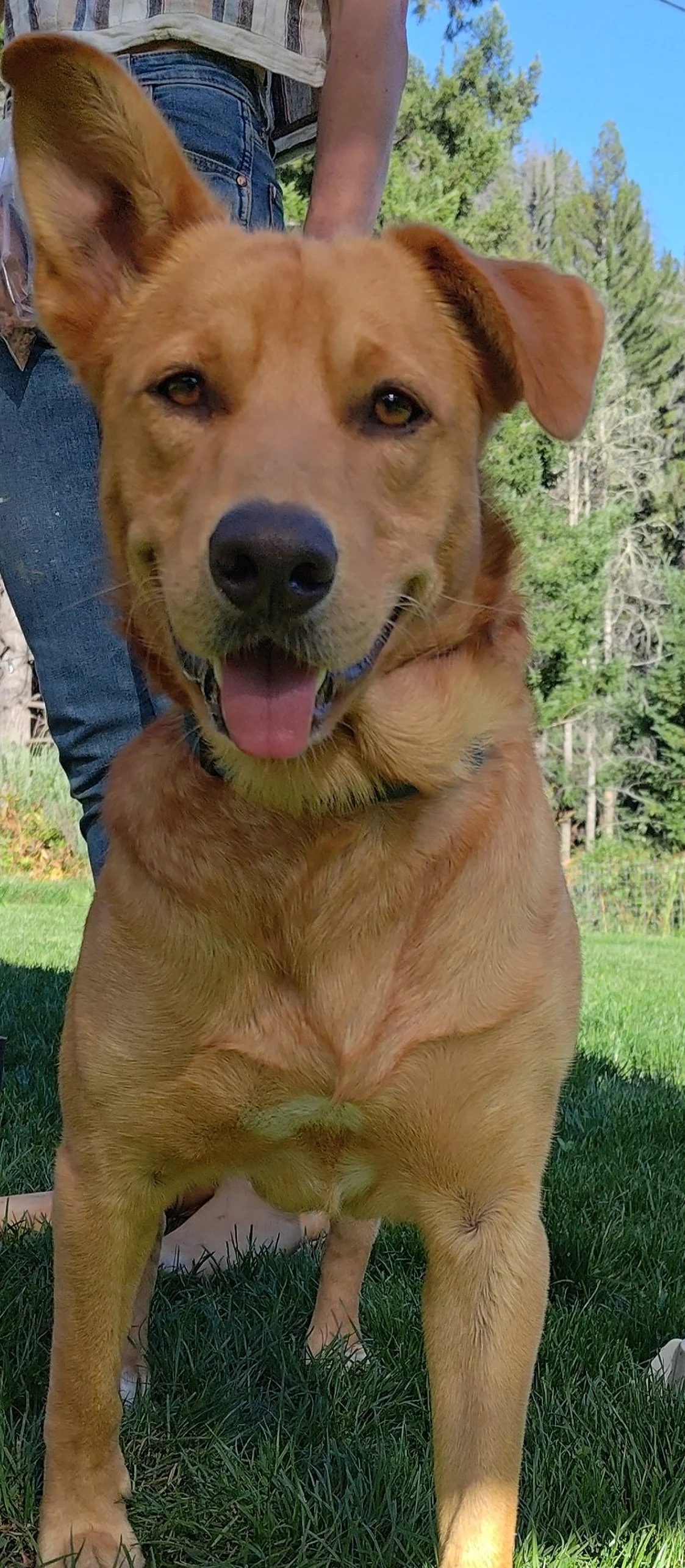
One ear up to better listen for cues and markers is ideal.
The word ‘command’ implies that there will be quick compliance. But a dog doesn’t *have* to do something just because a word was said. A computer does the command. My car goes when I push on the gas pedal. Your dog does the skill reliably based on what they understand as potential rewards, consequences, and how much they’re conditioned to enjoy it. My dogs come when I say ‘come!’ because they learned when I say that word, they can chase me for treats or a toy. And that I’m leaving the area - they don’t want to be left behind.
So, nope, I don’t use commands. I don’t assume my dogs will respond to a word itself. I have to take into account the greater picture. Their emotional state. What else is happening in the environment. My tone and body language. Our history of practicing with that word. Our words have a connotation behind them that shapes our views, biases, and behaviors. Semantics matters
As the humans asking our dogs to live in our human world and on our schedule, it’s up to us to think critically about the bigger picture of how our dogs learn and perceive the world.
With some initial semantics out of the way, let’s start out our blog series on cues! The incredible advantage of how much our dogs take in when they learn means we can turn the environment, and even their triggers, into cues to behaviors. Stay tuned and follow along to advance your training to be clearer and more efficient so we can build our best partnerships together.