
Real Enrichment, Real Fullfilment, Real Rest
An enrichment toy is to dogs what a sudoku puzzle is to humans.
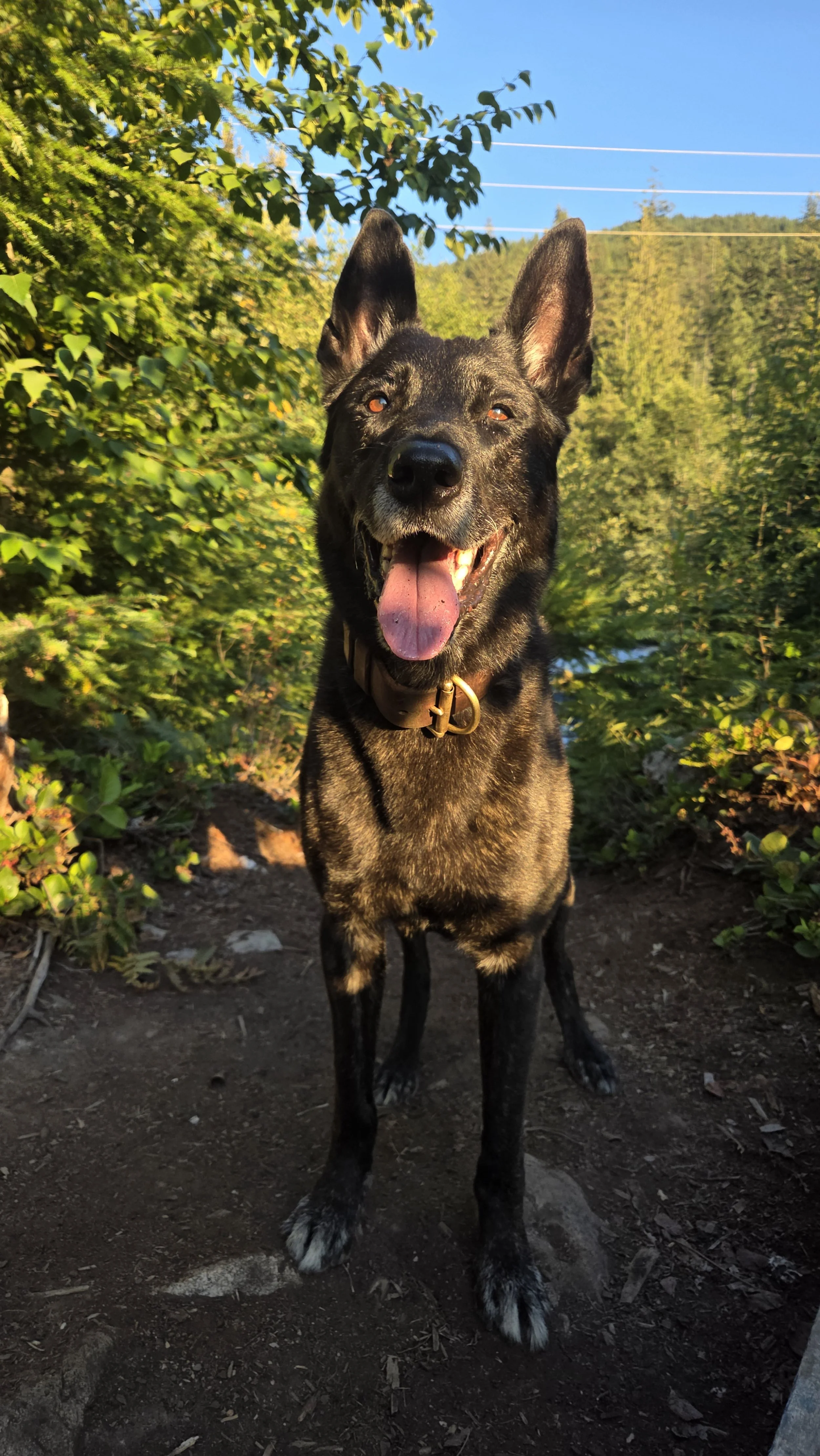
Tango excited to get to go explore a new section of forest together
It’s a fun little puzzle to have daily. A nice way to unwind and switch from a hectic day to a restful evening. A little boost of excitement and accomplishment when you complete a puzzle.
But it isn’t a substitute for doing the things that drive us humans - our real life goals, purposes, and relationships.
Enrichment isn’t just what can be bought
Or made out of scraps. Or scrounging for treat bits.
It’s fulfilling our individual genetic needs and drives.
It’s using bodies and muscles and proprioception.
It’s relationships and connections.
Enrichment, in the context of zoo animals and pets, is “a creative outlet for physical activity and mental exercise, as well as choice and control over how they spend their time” (Smithsonian National Zoo). And for animals in confinement, this ends up relying heavily on replicating foraging or hunting for food. Which is absolutely better than pellets in a dish in a sterile enclosure.
But our dogs aren’t zoo animals, and aren’t captive to the inside of our houses. Their enrichment can, and needs to be, more than to just puzzle toys and kibble hidden in empty paper towel rolls. (Except in the case of reactive or fearful dogs who need a quieter world. But keeping them entirely inside won’t help them gain confidence and grow as individuals. And of course for dogs recovering from illness or injury).
Enrichment is “the action of improving or enhancing the quality or value of something” (Oxford Dictionary).
What enriches your life? What makes you feel content? Satisfied at the end of the day? Accomplished? Able to rest, quiet?
It’s not chores or day-to-day routines.
For me, it’s time out in nature, when I’m hiking under big trees. Most of all, when I’m climbing on rock, fully engaged in making difficult moves and keeping everything spot on with our rope systems to keep us safe.
I’m enriched when connecting deeper with people, even in small glimpses.
I don’t feel truly enriched in life from sudoku puzzles.
I don’t feel truly enriched in life from casual conversations.
Frozen kongs and foraging for kibble are great - but they’re small glimmers of enrichment that just can’t stack up to what dogs’ genetics drive their minds and bodies for. They’re doing some sudoku puzzles and talking about the weather.
It’s a tiny intellectual snack.
Your dog is no different.
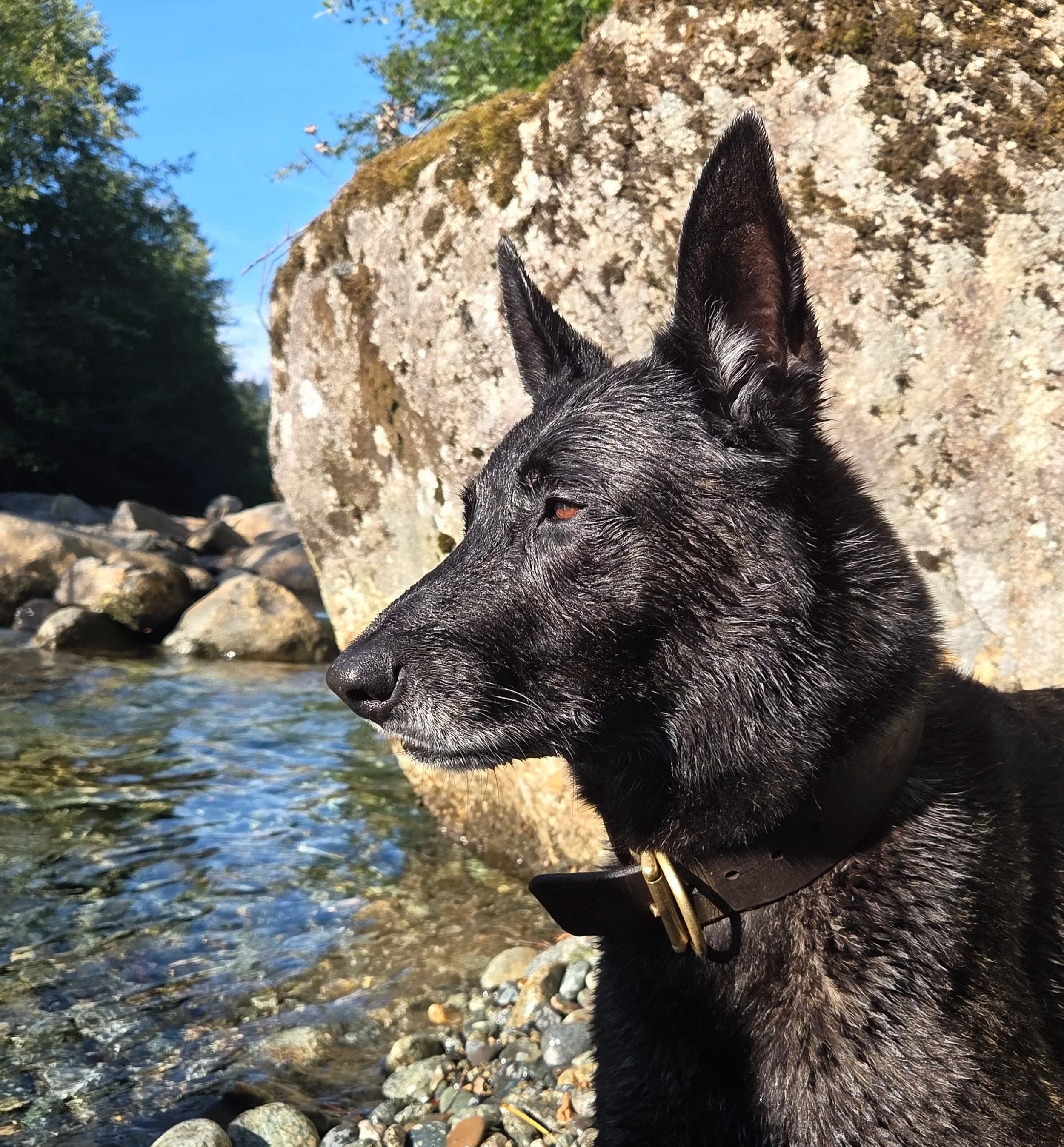
Tango feeling content after searching for sticks along the river
Enrichment = Fulfilling Genetics
Every breed—and every individual—carries generations of instincts, preferences, and abilities. Real enrichment taps into those instincts so dogs can do the things they were built to do.
Genetics also vary between individuals. It isn’t always a guarantee that every herding dog wants to herd. Just like from person to person, we can be more introverted or extroverted and have vastly different hobbies that call to us. The key is to watch your individual dog and see what sparks their ‘ahh, yes this!’
What Real Enrichment Looks Like
True enrichment is meaningful, engaging, and tied to who your dog is.
Your dog isn’t entirely trapped inside your home their entire life, like a zoo animal is inside their enclosure.
Your dog can venture out into the woods, an open field, a pond, a friend’s backyard - even on a long line. They can go for a drive and travel with you.
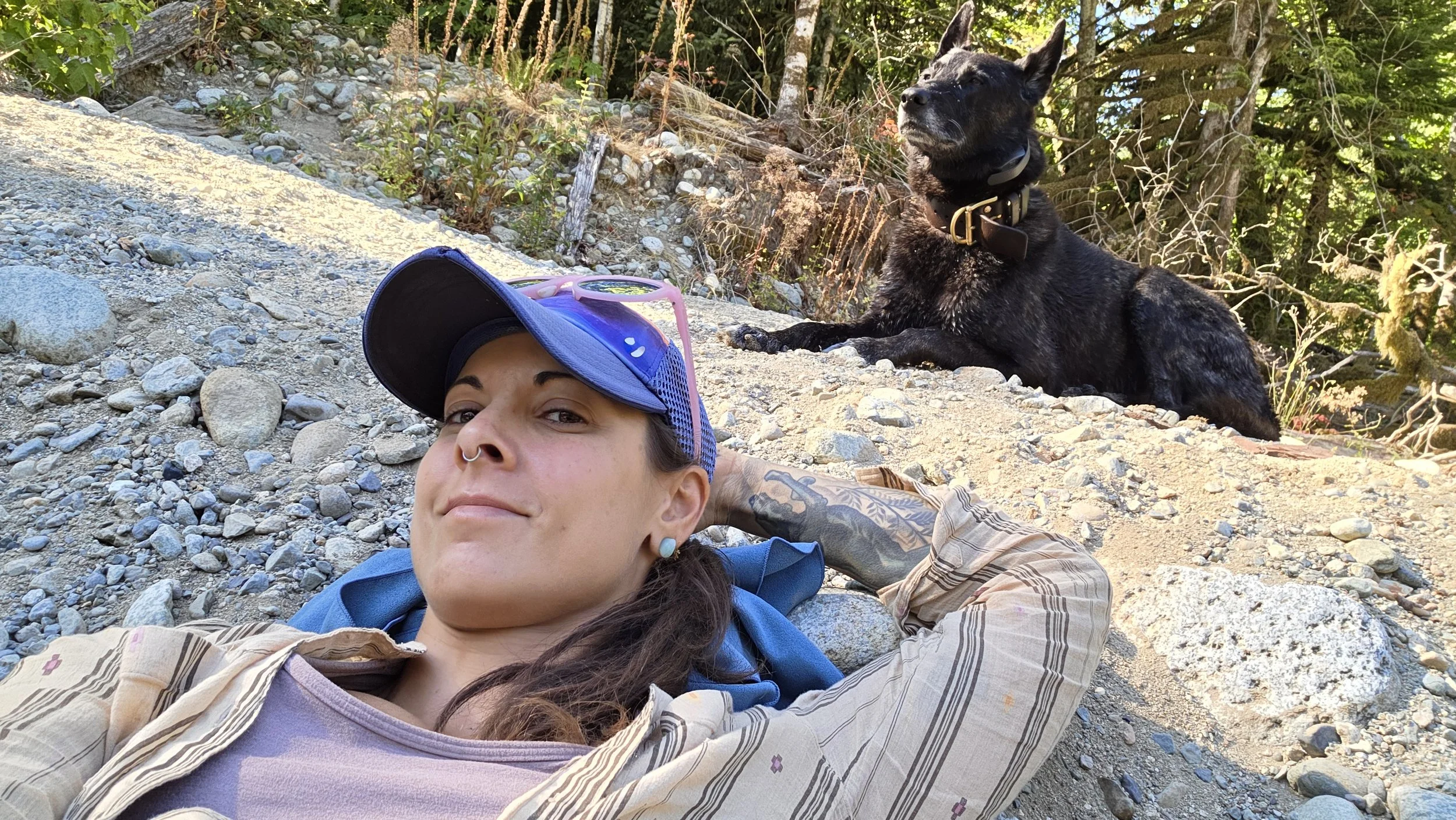
But most of all Tango wants to be out there doing the things together.
The absolute - biggest gamechanger - is shifting activities to be done *together*
At the start of all of our dogs’ histories, a common genetic thread they all share is doing their thing with their people.
Sometime between 30-50,000 years ago, protowolves started hanging around humans. That species then branched off into wolves and into dogs. Why did we hang around dogs?
It wasn’t just because they are adorable and furry and good at getting rid of scraps.
It was because they’re incredible at hunting - compared to us. Dogs have amazing scent and tracking abilities (obviously, especially compared to us!) And they are incredibly good at noticing movement. Which all means they are the ideal companion to help us locate prey out in the wild.
Then we were the ideal companion for dogs, who had spears and weapons that we could *throw* at prey from a distance. Game changer to be able to hunt from a distance, and not risk being injured running in to attack with your own teeth.
From there, it’s been thousands of years of guardian dogs watching flocks with a shepherd, maybe independently making their own decisions, but still moving through the world together. Thousands of years of hounds helping us find our next meal. Thousands of years of herding dogs listening to our guidance about where to move the flock. Thousands of years of terriers keeping down the rodent population for us while keeping us warm at night.
Moving through the world together and building a relationship through the mundane and the exciting. It isn’t transactional about just sitting and waiting for a release before eating a meal. It’s figuring out a puzzle of teaching your dog something when you both speak different languages, and figuring out that common language together.
Enrichment for dogs (and us!) is developing our relationships, novelty in our environment, and feeling accomplishment.
Accomplishment comes from figuring out puzzles, learning things, and I find most of all, ‘completing’ some sort of pattern that looks like what your dog’s general breed type was bred for. Herders want to control movement, terriers and protection breeds often want to be able to ‘catch’ the toy/prey. Most dogs love the process of using their noses to follow a scent to its source.
Here are some real-life examples:
For scent-driven dogs: Long decompression sniff walks, hide-and-seek games with scented objects, teaching them to track footsteps/trails.
For chasers: Flirt pole play, structured fetch, drag toys, or games with controlled movement.
For diggers: Designated dig boxes, sand pits, or safe “rooting” activities.
For chewers and shredders: Raw meaty bones (specifically vertebrae, which are softer and safer to gnaw on), cardboard destruction projects, tug games.
For problem-solvers: Real-world challenges—navigating different surfaces, exploring new places, climbing logs, stepping over rocks, figuring out how to reach hidden objects.
For social or relationship-oriented dogs: Training sessions learning new skills, massage sessions, engagement work on walks.
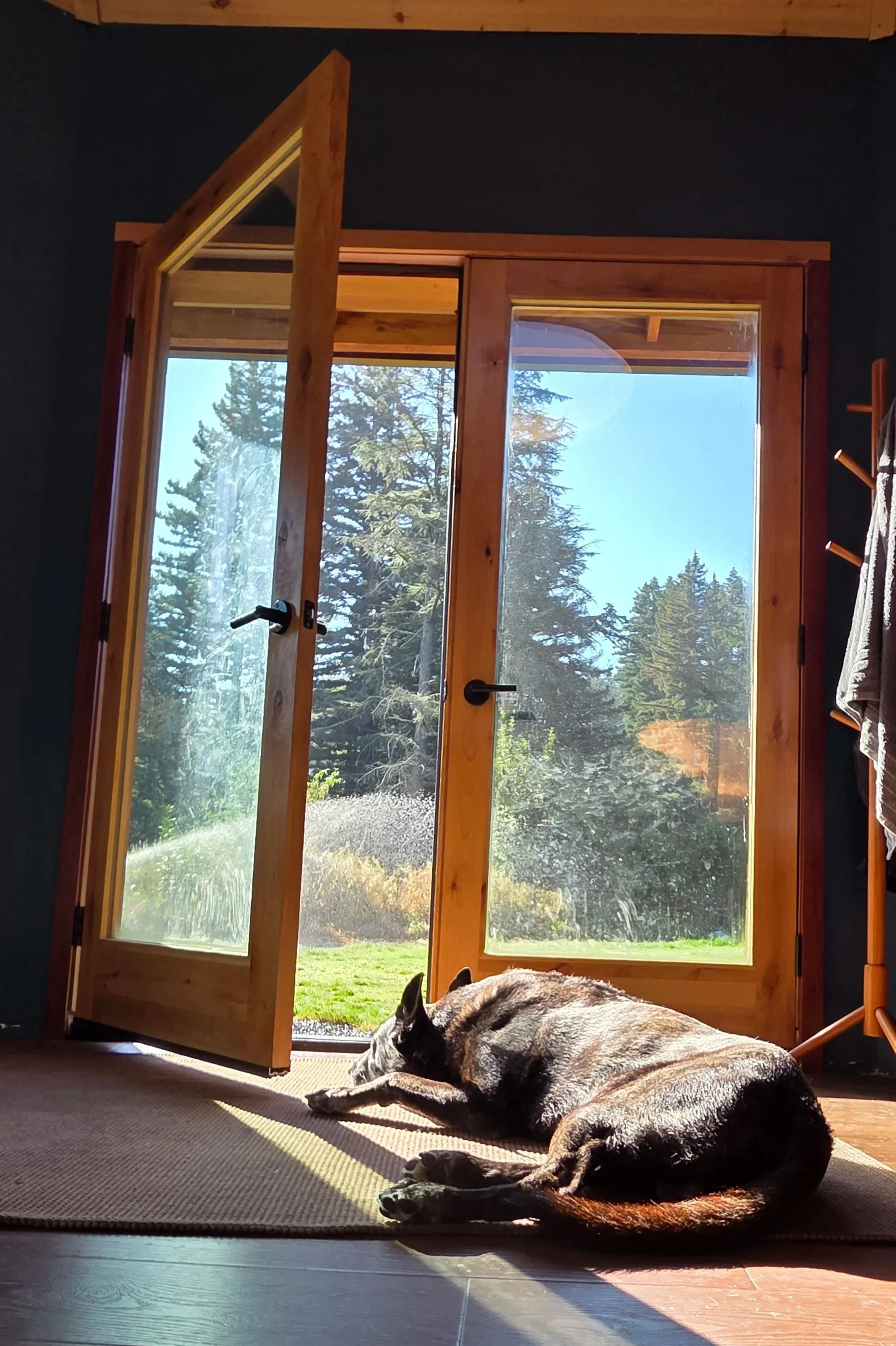
Tango watching the yard from inside, to stay just a bit closer to me.
Enrichment Is About the Whole Dog
Think less “quiet dog is good dog” and more “dog doing dog stuff in appropriate ways.”
The goal isn’t to tire them out so they sleep. It’s to fill their bucket so they feel satisfied, balanced, and able to make good decisions.
It’s about variety and building challenges, too. The same slow feeder might be interesting a few times, but it will quickly just feel frustrating. The best long-term enrichment activities are ones that you can mix up. Think hiking in new places, or shifting from searching for food to searching for a nosework scent for a food reward after finding it, then increasing the difficulty of the hide location and search area size! Exploring the world together doesn’t have to mean traveling all over the US. It’s as simple as showing your dog what’s underneath a rock in the stream or checking out a cool stick or leaf in the ground (my favorite ways to bond with puppies).
When you choose activities that align with your dog’s instincts, you don’t just get a tired dog—you get a fulfilled one. And fulfilled dogs are calmer, happier, easier to train, and more connected to their humans.
Enrichment puzzles, stuffed kongs, and chews are absolutely a part of my dogs’ everyday routine! But they’ll never replace real life enrichment. Enrichment toys and little games are great to downshift when they need to transition from running to resting. Just like sudoku, they’re a great little treat to add into the day that does no harm, and gives them some fun dopamine. And on days when I’m just too sick or the weather is too bad, they can act as a temporary filler to help offset those boring days.
Final Thoughts
Puzzle toys are great. Keep them! Use them! They’re part of the picture.
Just don’t let them be the whole picture.
Your dog’s enrichment should be as rich and varied as your own.
After all, both of you deserve lives filled with more than sudoku and quips about the weather.